
“`html
When it comes to protecting your business from cyber threats, it’s easy to assume that expensive security software and advanced tools are the answer. Many business owners believe that investing thousands of dollars in the latest technology will automatically keep their data safe. However, our experience working with small and medium-sized businesses has shown us a different reality: basic cybersecurity habits matter far more than costly tools.
The truth is that most data breaches don’t happen because of sophisticated hacking techniques. They occur because of simple, preventable mistakes that any business can avoid with the right habits and awareness. While security tools certainly have their place, they can’t protect you from human error or careless practices.
The Gap Between Technology and Human Behavior
We’ve seen countless businesses invest heavily in firewalls, antivirus software, and encryption tools, only to suffer a security incident because someone on their team made a basic mistake. Technology can only do so much when the people using it don’t follow fundamental security practices.
Think of it this way: you can install the most advanced lock on your door, but if you leave the key under the welcome mat, you’re still vulnerable. The same principle applies to cybersecurity. Your expensive tools become almost useless when paired with poor security habits.
One Common Mistake: Weak Passwords
One of the most common mistakes we encounter is the use of weak, easily guessable passwords. Despite decades of warnings about password security, many employees still use passwords like “Password123” or their company name followed by the year. Some businesses even share passwords among multiple team members or write them on sticky notes attached to monitors.
This single habit creates an open door for cybercriminals. When attackers gain access through weak passwords, they can bypass even the most expensive security systems. We’ve worked with businesses that spent thousands on security software but lost critical data because an employee used their pet’s name as a password across multiple accounts.
The financial impact can be devastating. According to industry research, the average cost of a data breach for small businesses ranges from tens of thousands to hundreds of thousands of dollars, including downtime, recovery costs, and potential legal consequences.
One Simple Habit That Reduces Risk: Multi-Factor Authentication
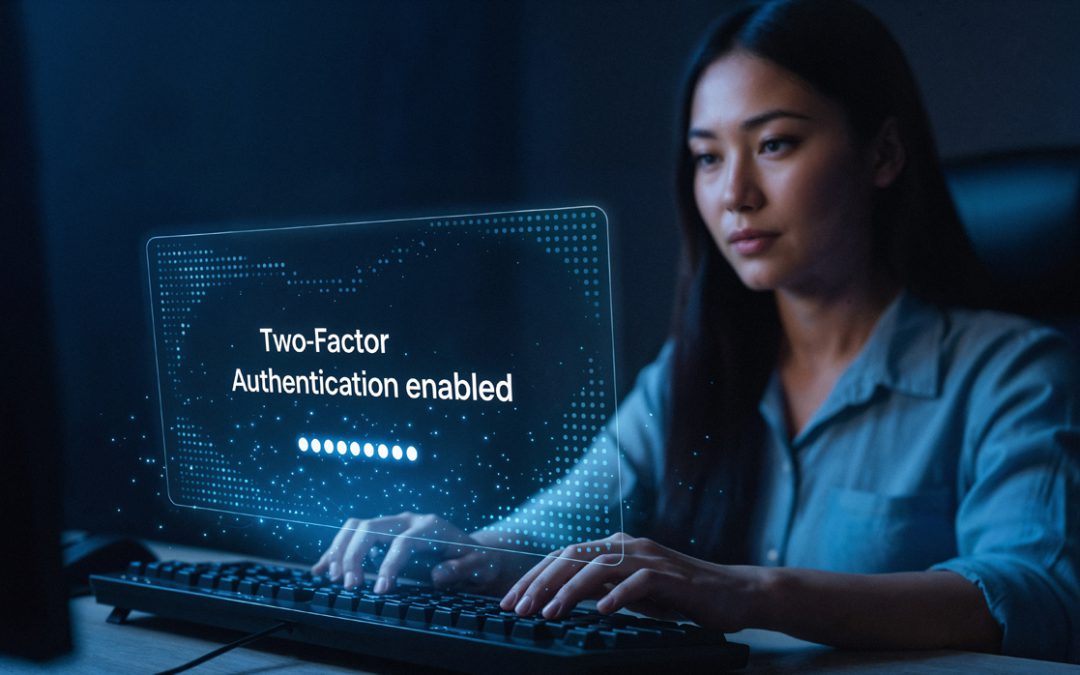
The good news is that one simple habit can dramatically reduce your risk: implementing and consistently using multi-factor authentication, or MFA. This security measure requires users to provide two or more verification factors to gain access to an account or system.
Multi-factor authentication typically combines something you know, like a password, with something you have, like a code sent to your phone. Even if a cybercriminal obtains your password, they still can’t access your account without that second factor.
Our team has helped numerous businesses implement MFA across their critical systems, and the results speak for themselves. This single habit stops the vast majority of unauthorized access attempts, regardless of how sophisticated the attack might be. Best of all, most MFA solutions are either free or very affordable, proving that effective security doesn’t require expensive tools.
A Real-World Example
Consider a small accounting firm we worked with last year. They had invested in mid-range security software but hadn’t focused on basic security habits. One of their employees fell for a phishing email and unknowingly provided their login credentials to attackers.
Fortunately, we had recently helped them implement MFA across all their business applications. When the attackers tried to log in using the stolen credentials, they were blocked because they couldn’t provide the second authentication factor. The employee’s phone received multiple unexpected authentication requests, which alerted them to the problem immediately.
Without MFA, this simple mistake could have resulted in unauthorized access to sensitive client financial data, regulatory violations, and significant financial losses. Instead, the basic habit of using multi-factor authentication prevented a potential disaster at minimal cost.
Business Benefits of Focusing on Basic Habits
- Significant risk reduction without major financial investment
- Protection against the most common types of cyber attacks
- Easier for employees to understand and implement compared to complex tools
- Reduced insurance premiums as insurers recognize better security practices
- Enhanced client trust when they see you take security seriously
- Lower long-term costs compared to recovering from a security incident
- Foundation for scaling security as your business grows
Frequently Asked Questions
Do I still need security software if I follow good habits?
Yes, but you don’t need the most expensive options. Basic security habits work alongside affordable security tools to provide comprehensive protection. Think of habits as your foundation and tools as additional layers of defense.
How long does it take to train employees on basic security habits?
Most essential security habits can be taught in a single training session lasting one to two hours. The key is regular reinforcement and making these practices part of your company culture rather than treating them as one-time lessons.
Will multi-factor authentication slow down my team’s work?
The additional time required for MFA is typically just a few seconds per login. Modern MFA solutions offer options like mobile app notifications or biometric authentication that make the process quick and seamless. The minor inconvenience is far outweighed by the security benefits.
What if my business is too small to be targeted by cybercriminals?
This is a dangerous misconception. Cybercriminals often target small businesses specifically because they tend to have weaker security. Automated attacks don’t discriminate by company size, and your business data is valuable regardless of how many employees you have.
Conclusión
Protecting your business from cyber threats doesn’t require breaking the bank on expensive security tools. While technology plays an important role, the foundation of effective cybersecurity lies in consistent, basic habits that anyone can learn and practice.
By addressing common mistakes like weak passwords and adopting simple protective measures like multi-factor authentication, you can significantly reduce your risk without major financial investment. Our team has seen firsthand how these fundamental practices protect businesses of all sizes from the most common threats they face.
If you’re ready to strengthen your company’s security posture with practical, cost-effective strategies, we’re here to help. Schedule a free assessment with our team to discover which basic security habits will have the biggest impact on protecting your business.
“`